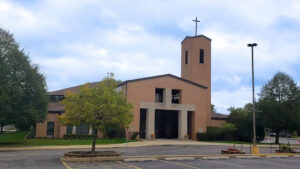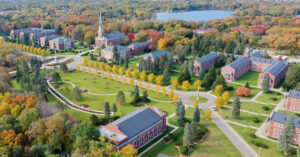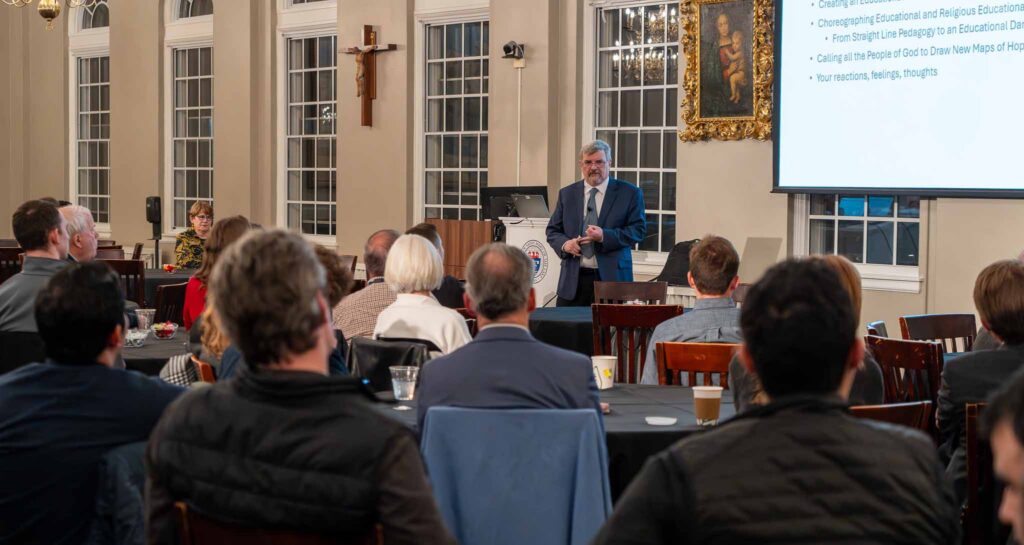
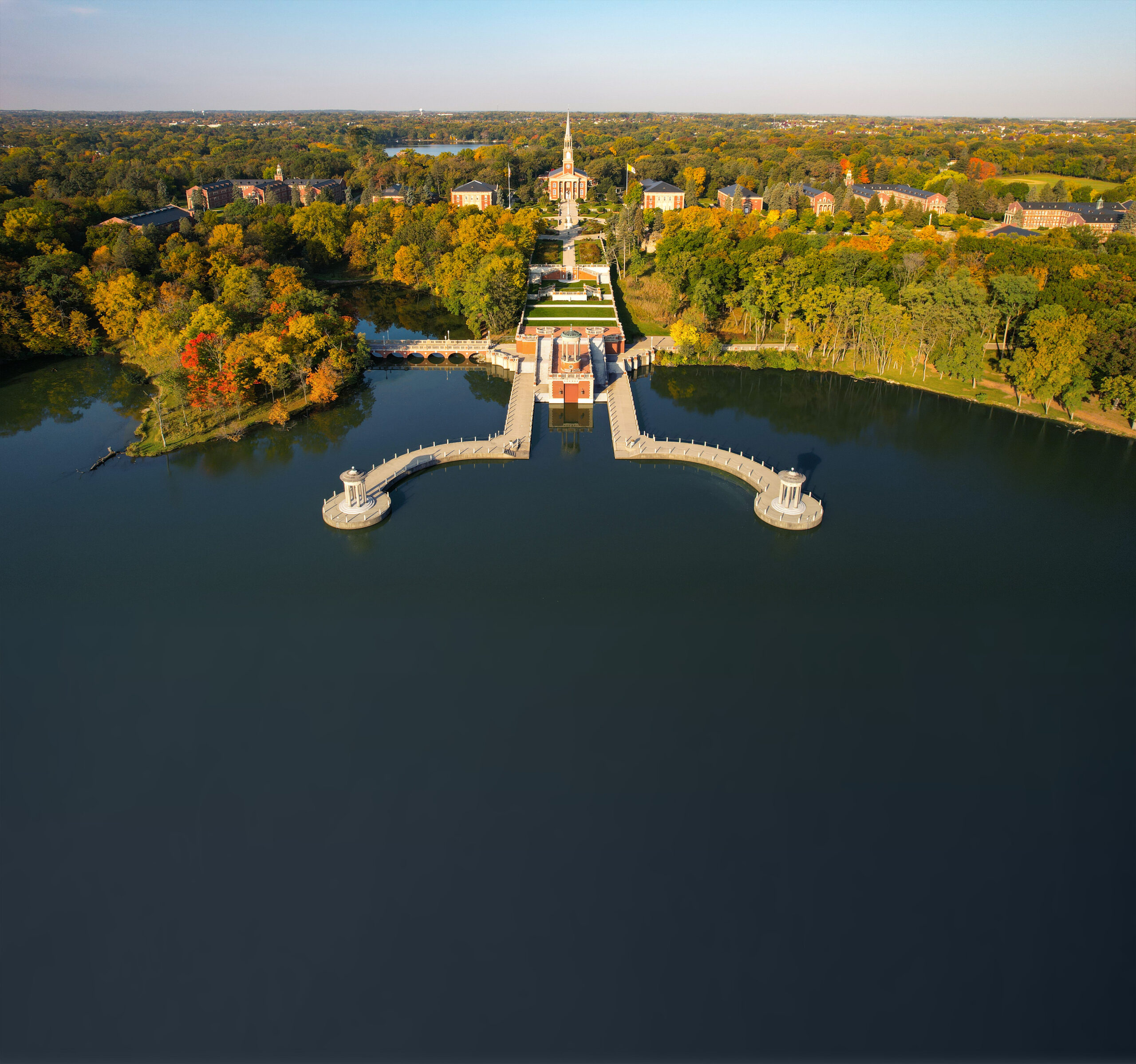
Most of the Formation Days are presented on the magnificent University of St. Mary of the Lake Campus where nine hundred acres provide a sacred space that's close enough to get to, but far enough to get away. During breaks or at the end of a formation day, you can walk the trails and enjoy the lavish natural and man-made beauty of this remarkable campus (CLICK HERE to see a Photo Tour of the USML Campus).
All formation days include hot lunch in the spacious Dining Hall of Mundelein Seminary.
Formation - Year I
2008-2009
CALENDAR AND LISTING
FORMATION CALENDAR - YEAR I
| September 2008 |
| |
October 2008 |
|
| November 2008 |
- November 15, 2008 from 9:00 am to 3:30 pm
VALUES & GIFTS
Lynn Mc Creery, M.P.S. - USML Mundelein, Bldg. 800
|
| December 2008 |
|
| January 2009 |
|
| February 2009 |
- February 14, 2009 from 9:00 am to 3:30 pm
FAMILY (YEARS I & II) (May bring a guest- $15)
Rev. Robert Sears SJ, Ph.D. - USML Mundelein, Conference Center Bldg. 400
|
| March 2009 |
|
| May 2009 |
|
FORMATION LISTING - YEAR I
Opening Retreat: Exploring My Spirituality
(September, Friday
evening through Sunday noon) |
|
This retreat introduces the whole year’s focus on personal spirituality. Spirituality is presented as the way one copes with life,
one’s basic attitudes and behaviors. Emphasis is placed on the spirituality of the Real - the way God works through the real events of our lives - rather than the spirituality of the Ideal - a frame work in which individuals are striving to live up to some unattainable concept of what life should be about.
Input, reflection, small group sharing, prayer, and ritual are used to assist the participants in naming their present situation in the spiritual life. The retreat closes by setting one’s personal spiritual growth in the context of the Church’s understanding of spiritual growth - the Paschal Mystery of Jesus.
Growth Begins With Self-Knowledge
(Saturday in October) |
|
Using the Myers-Briggs Type Indicator, participants (a) learn
more about their own personality, (b) discover the implications of
their personality Type for spiritual growth, (c) grow in understanding how people are legitimately different from each other, and (d) learn to see that differences can be gifts. Participants are invited to bring one guest who participates fully in the day. This firsthand experience of a part of the program can help build support and understanding among spouses and close friends.
Faith Journey and Faith Development
(Saturday in October)
Years I & II - Odd numbered calendar years |
|
As human persons, our faith grows and matures through predictable stages. In order to serve effectively, ministers must know the characteristics and challenges of each stage of faith. They also need knowledge of how to minister to individuals operating at different stages of faith development. The history of Israel and the person of Jesus will be used to look at the development and maturation of our own faith. The theories of Fowler and others will be examined.
Ministerial Leadership Skills
(Saturday In October)
Years I & II
- Even numbered calendar years |
|
The underlying assumption of this course is that ministry is a collaborative endeavor. Ministry takes place within a community setting and is
exercised by individuals acting as members of a ministry team. In addition, there is the expectation that one’s role in ministry frequently involves the formation and leadership of various groups.
Therefore, the purpose of the pastoral skills course is to provide an introductory understanding of the characteristics and dynamics of groups and different styles of participation within groups and to become aware of specific skills which help achieve healthy group interaction: leadership, decision making, problem solving, & planning. MBTI insights will be integrated into understanding of group dynamics and leadership styles.
Identifying Values and Gifts
(Saturday in November) |
|
Participants name the values which motivate them and identify the gifts they have used in significant life situations. Roadblocks and resources for living-out one’s values are considered. A profile sheet, drawn up by each participant, summarizes key personality traits, priority values, and personal gifts.
Ministry & Moral Decision Making
(Saturday in December)
Years I & II - Even numbered calendar years |
|
The foundations out of which we make decisions are an essential component of who we are. Making moral decisions is a skill that can be developed. This day will provide an opportunity to look at various moral theories and to bring greater clarity, focus, and skill to the process of moral decision making.
Mariology and Devotional Piety
(Saturday in December)
Years I &
II - Odd numbered calendar years |
|
No woman holds a higher place in the Catholic consciousness than Mary of Nazareth, the Mother of Jesus. The first part of this formation day will explore the following:
- Mary’s role in salvation history
- Mary as model of Discipleship
- Marian dogmas
- Marian titles and their implicit theology
- The rosary and other Marian devotions
- Marian apparitions and the Church’s stance
There are many other devotions that feed the soul of Catholics.
Another goal of this day is to look at the role devotions play in
the life of the Church and to explore how devotions and devotional practices have changed since Vatican II. The prayer life of the Church needs to focus on both the transcendent and the immanent. Devotions seem to connect people with both. The principle areas of focus for the second part of the day will be:
- Eucharistic Devotions
- Culture and devotions
- Role of the miraculous
- New age impact on devotions
- Evaluating devotions
- Role of devotions in parish life.
Leadership of Prayer
(Saturday in January)
Years I & II - Odd
numbered calendar years |
|
This day focuses on the specific skills needed in the leadership of group prayer. Many participants already are called upon to do this in their ministry. Topics include: presiding style, designing services, writing prayers, selecting scripture and music. This day supplements the use of various prayer forms throughout the program and practice during the Sacraments and Prayer course.
Church and Culture
(Saturday in January)
Years I & II - Even
numbered calendar years |
|
This day introduces participants to the tensions and the trends at work in the larger Church of today. The inculturation of faith is explored by focusing on the interplay of religious culture and social culture, and on the challenge of pluralism in Karl Rahner’s “third epoch” of Christianity. Presenters from the Latino, African-American, Asian and Eastern European communities offer
insights on the cultural and ecclesial aspects of their respective communities.
Family: How it Works and How it Heals
(Saturday in February)
Years I & II - Odd numbered calendar years |
|
Families are called upon to be the “center and heart of the civilization of love” (Letter to Families, Pope John Paul II), yet it is no secret that American families are in crisis. Because parenting and marital issues are number 1 and 2 areas on which pastoral staffs spend time & energy, a basic understanding of family dynamics is indispensable for all pastoral ministers. The church must not only offer families means of coping, but hope for healing. This day examines family systems and dynamics and discusses strategies for healing from both psychological and spiritual perspective.
Christian Sexuality
(Saturday in February)
Years I & II - Even
numbered calendar years |
|
Whether living a married, single or celibate lifestyle, the Christian person is also a sexual person. People in ministry must be aware of the powerful role that sexuality plays in every person’s life. This day looks at sexuality as a component of human personality from a uniquely Christian perspective in order to help those who minister posses a clearer understanding of what constitutes healthy sexuality and how that understanding contributes to effective ministry.
Stewardship of Life’s Sacraments
(Saturday in March) |
|
This day begins with reflection on one’s life purpose or sense of vocation. These learning’s are added to each person’s profile. The key input of the day focuses on the conflicting models of ministry: dominator vs. partnership. Each participant, regardless of marital status, is involved in relationships symbolized by the sacrament of Marriage. Each participant, while not ordained, is involved in church ministry symbolized by the sacrament of Holy Orders. Given the demands of each of these facets of life, the issue of balance is explored. This theme of stewardship is processed through reflection on concrete examples of the Great Commandment - love of self and others as indicators of ones’ acceptance of God’s unconditional love.
Tools for the Journey:
Spiritual Direction, Prayer, Goal Setting
(Saturday in May) |
|
Participants are provided with an opportunity to summarize the insights they have gained into their personal spirituality. Prayerful consideration reveals areas for growth. Participants then travel through a process of brainstorming and selection of two goals. One is personal; the other is in their area of ministry. There is input on the criteria for spiritual discernment, the role of personal prayer, and spiritual direction.
SUMMER FORMATION ASSIGNMENTS
Back to Top 
Press to Open / Print this Summer Assignments in Microsoft Word
Summer Reading - Participants meet with a partner or in discussion
groups for monthly conversations on their reading and submit
written reports on the books read.
| Praying Our Experiences, Schmidt, Joseph F., FSC.
Winona, MN: St. Mary’s Press, 1980 |
| Spirituality, Walsh, Eugene A., OCP Publications, 1993 |

Ministry Visit - (Summer to fall) Participants visit a social service ministry in a cross-cultural setting. The visit and subsequent reflection serve to widen participants’ experience of ministry and cultural plurality.
Formation - Year II
2008-2009
CALENDAR AND LISTING
Back to Top 
FORMATION CALENDAR - YEAR II
| September 2008 |
- September 29, 2008 from 9:00 am to 3:30 pm
THEOLOGICAL REFLECTION
Graziano Marcheschi, D. Min. -
USML Mundelein, Bldg. 800
|
October 2008 |
|
| November 2008 |
- November 22, 2008 from 9:00 am to 3:30 pm
MY PLACE IN THE PARISH
Michael Dowling, M. Div., D. Min. (cand.) - USML Mundelein, Bldg. 800
|
| December 2008 |
|
| January 2009 |
|
| February 2009 |
- February 14, 2009 from 9:00 am to 3:30 pm
FAMILY (YEARS I & II) (May bring a guest- $15)
Rev. Robert Sears SJ, Ph.D. - USML Mundelein, Conference Center Bldg. 400
|
| March 2009 |
- March 21, 2009 from 9:00 am to 3:30 pm
MINISTERIAL IDENTITY
Michael Dowling, M. Div., D. Min. (cand.) -
USML Mundelein, Bldg. 800
|
| April 2009 |
|
| May 2009 |
- MAY 9, 2009 at 3:00 pm
CONVOCATION - USML Mundelein, Auditorium
- MAY 16, 2009 from 9:00 am to 1:00 pm
PULLING IT TOGETHER -
USML Mundelein, Bldg. 800
- MAY 31, 2009 at 3:00 pm
LITURGY OF THANKSGIVING - Saint Lawrence O'Toole in Matteson, IL
|
FORMATION LISTING - YEAR II
The Art of Theological Reflection
(Saturday in September) |
|
This day introduces the basic tool of second year formation. In
order to live life more consciously, participants learn a method of
theological reflection through an experience/explanation format.
The process includes sharing an experience of ministry in narrative
form, expressing feelings and context of the experience in a metaphor, then finding parallel and/or contrasting expression in the tradition. To further develop theological reflection skills, after subsequent formation days, participants are given written theological reflection assignments related to the content of the day. Participants will be able to enrich their ministerial activities with the skills of theological reflections: breaking open life experience, naming and deepening the stance of faith.
Ministerial Leadership Skills
(Saturday In October)
Years I & II
- Even numbered calendar years |
|
The underlying assumption of this course is that ministry is a collaborative endeavor. Ministry takes place within a community setting and is
exercised by individuals acting as members of a ministry team. In addition, there is the expectation that one’s role in ministry frequently involves the formation and leadership of various groups.
Therefore, the purpose of the pastoral skills course is to provide an introductory understanding of the characteristics and dynamics of groups and different styles of participation within groups and to become aware of specific skills which help achieve healthy group interaction: leadership, decision making, problem solving, & planning. MBTI insights will be integrated into understanding of group dynamics and leadership styles.
Faith Journey and Faith Development
(Saturday in October)
Years I & II - Odd numbered calendar years |
|
As human persons, our faith grows and matures through predictable stages. In order to serve effectively, ministers must know the characteristics and challenges of each stage of faith. They also need knowledge of how to minister to individuals operating at different stages of faith development. The history of Israel and the person of Jesus will be used to look at the development and maturation of our own faith. The theories of Fowler and others will be examined.
My Place in the Parish
(Saturday in November) |
|
Participants are asked to integrate their understanding of their spirituality and gifts for ministry vis-à-vis the realistic context within which they will be ministering. They are challenged to examine their views of collaboration vs. competition and how these relate to their ministerial style.
Ministry & Moral Decision Making
(Saturday in December)
Years I & II - Even numbered calendar years |
|
The foundations out of which we make decisions are an essential component of who we are. Making moral decisions is a skill that can be developed. This day will provide an opportunity to look at various moral theories and to bring greater clarity, focus, and skill to the process of moral decision making.
Mariology and Devotional Piety
(Saturday in December)
Years I &
II - Odd numbered calendar years |
|
No woman holds a higher place in the Catholic consciousness than Mary of Nazareth, the Mother of Jesus. The first part of this formation day will explore the following:
- Mary’s role in salvation history
- Mary as model of Discipleship
- Marian dogmas
- Marian titles and their implicit theology
- The rosary and other Marian devotions
- Marian apparitions and the Church’s stance
There are many other devotions that feed the soul of Catholics.
Another goal of this day is to look at the role devotions play in
the life of the Church and to explore how devotions and devotional practices have changed since Vatican II. The prayer life of the Church needs to focus on both the transcendent and the immanent. Devotions seem to connect people with both. The principle areas of focus for the second part of the day will be:
- Eucharistic Devotions
- Culture and devotions
- Role of the miraculous
- New age impact on devotions
- Evaluating devotions
- Role of devotions in parish life.
Leadership of Prayer
(Saturday in January)
Years I & II - Odd
numbered calendar years |
|
This day focuses on the specific skills needed in the leadership of group prayer. Many participants already are called upon to do this in their ministry. Topics include: presiding style, designing services, writing prayers, selecting scripture and music. This day supplements the use of various prayer forms throughout the program and practice during the Sacraments and Prayer course.
Church and Culture
(Saturday in January)
Years I & II - Even
numbered calendar years |
|
This day introduces participants to the tensions and the trends at work in the larger Church of today. The inculturation of faith is explored by focusing on the interplay of religious culture and social culture, and on the challenge of pluralism in Karl Rahner’s “third epoch” of Christianity. Presenters from the Latino, African-American, Asian and Eastern European communities offer
insights on the cultural and ecclesial aspects of their respective communities.
Family: How it Works and How it Heals
(Saturday in February)
Years I & II - Odd numbered calendar years |
|
Families are called upon to be the “center and heart of the civilization of love” (Letter to Families, Pope John Paul II), yet it is no secret that American families are in crisis. Because parenting and marital issues are number 1 and 2 areas on which pastoral staffs spend time & energy, a basic understanding of family dynamics is indispensable for all pastoral ministers. The church must not only offer families means of coping, but hope for healing. This day examines family systems and dynamics and discusses strategies for healing from both psychological and spiritual perspective.
Christian Sexuality
(Saturday in February)
Years I & II - Even
numbered calendar years |
|
Whether living a married, single or celibate lifestyle, the Christian person is also a sexual person. People in ministry must be aware of the powerful role that sexuality plays in every person’s life. This day looks at sexuality as a component of human personality from a uniquely Christian perspective in order to help those who minister posses a clearer understanding of what constitutes healthy sexuality and how that understanding contributes to effective ministry.
Ministerial Identity
(Saturday in March) |
|
Ministry isn’t so much about what you do as who you are. All ministry flows from our baptismal consecration to Christ and is reflected in our daily living. As baptized lay Catholics we witness our faith in the world, in our neighborhoods, at work, and in our families. Since Vatican II, many lay men and women have felt called to specific ministries within the Church; liturgical roles, social outreach, catechesis, serving on Pastoral Councils, etc. What does it mean to be a lay ecclesial minister? Topics explored during this formation day include:
- qualities of a Minister
- lay ecclesial ministry as a vocation
- nurturing the spiritual life of the lay minister public presence and responsibilities of the lay minister
Ecclesial Self-Confidence
(Closing Retreat April, Friday evening
through Sunday noon) |
|
Focuses on their growth in ministry during the program years. Participants identify, communally and individually, the factors and dynamics which give them self-confidence as they leave the program and move into ministry. They probe their needs for ongoing support, growth and formation.
Pulling It All Together
(Saturday in May) |
|
Provides a final opportunity for theological reflection, program evaluation, prayer and practice for the Mass of Thanksgiving.
|